The Navy’s Distinguished Visitor embark program invites civilians to land, stay the night and take off from an aircraft carrier. I was lucky enough to be invited and share my experience of this trip of a lifetime.
On one beautiful day in January of 2010, I was given the honor of landing, staying the night, and taking off from the nuclear aircraft carrier, The USS Harry S. Truman.
It was loud, it was big and it was a great eye-opener of how challenging a day to day life of a sailor truly is.
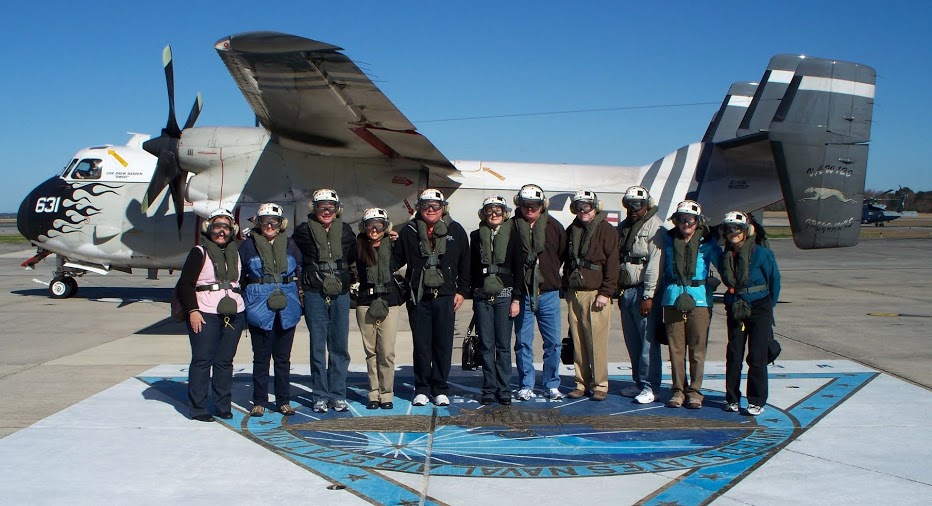
The entire group of visitors chosen to be a part of the Navy’s Distinguished Visitor Embark Program
The DV program is basically the Navy’s effort to raise awareness to civilians of the day to day work that goes into keeping this country safe. The program has existed for a while but only recently has the focused switched from inviting military retirees to inviting civilians with little to no military background (particularly women) and opening their eyes to day to day life as a sailor.
It consists of a group of about a dozen people from all walks of life, who fly onto an aircraft carrier that’s already out to sea, stay the night on board the ship, and take off from the carrier the next day.
In a nutshell, its a trip of a lifetime that a lucky few will never forget.
Before takeoff, everyone in the group is required to meet at the local base, NAS Jax, to prepare for takeoff of a normal flight.
If a “normal flight” includes signing a waiver that says “The United States Navy is not responsible for your death.”
We had all packed an overnight bag and were busy introducing ourselves to everyone in the group. You could tell by the looks of each of our faces that we were all feeling a bit anxious just at the thought of landing on an air craft carrier in the middle of the Atlantic.
After the check in process, the group of 11 of us were lead into a room where the CO of NAS JAX (the boss) greeted us and gave us a brief on the events that were about to take place.
The Coin Tradition
At the closing of brief, we were all given the first souvenir of our trip, the a coin that symbolizes great tradition in the Navy.
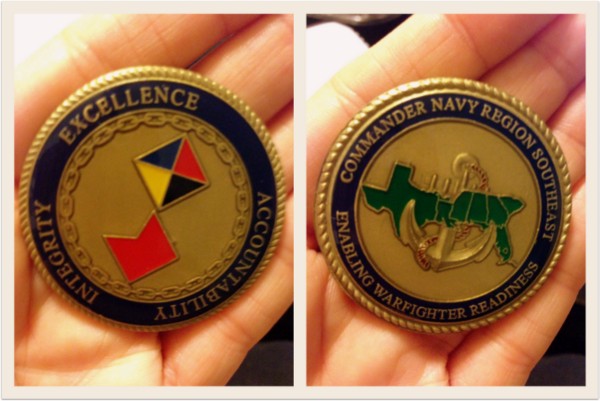
The front and back of the coin exchanged at NAS Jax
The coin is given through a handshake and you’re not to drop it during this critical first transfer as it’s very bad luck.
The transfer of a symbolic coins is a tradition of CO’s and Admirals in the Navy.
Anytime you’re out at a restaurant/bar, you can look for the CO or Admiral that gave you the coin, should you spot him and produce your coin and he cannot produce his to match, the Admiral/CO must buy you a round of your favorite drink.
But if he does produce his coin, the tables are turned and you’re then forced to buy the round.
“You can bet I will always be able to produce my coin” said Admiral Alexander with a confident look on his face that wouldn’t dare challenge.
Taking Off From NAS Jax
After waiting in the holding area minutes that felt like hours, we were provided with helmets and life vests as a couple of the sailors started briefing us as to how the walkout to the plane, taking off and landing will all work.
Since the planes are so loud, most of this information was given in the lobby before the helmets are placed on. The plane we were about to take off on first flew in 1964 but from first glance, looked like the ‘bad ass’ out of the bunch with black flames painted on the nose of the aircraft.
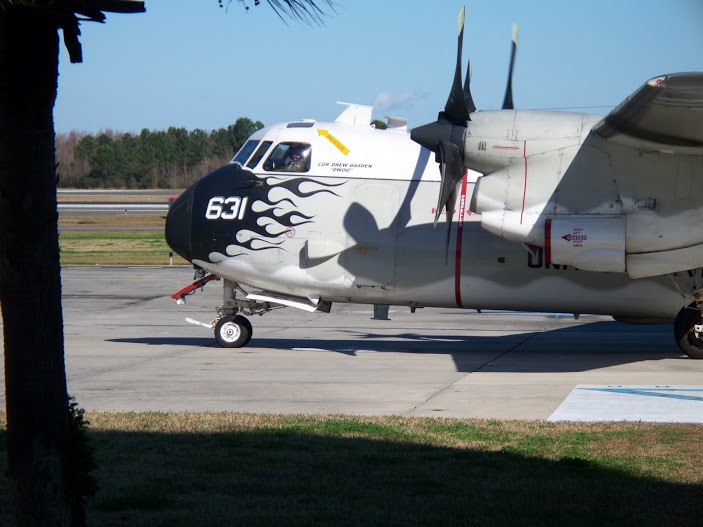
Commercial flights will always look sub-par compared to the COD plane we were about to fly in
The C2 plane (aka COD- Carrier on Delivery) has only 2 windows, the seats face backward (which takes some getting to use on the equilibrium portion), has one ramp in the back, and is about the biggest ship that lands on an aircraft carrier.
Sorry, no bathrooms, peanuts or pillows provided. There is however overhead storage for the oxygen masks and life raft. Great confidence booster.
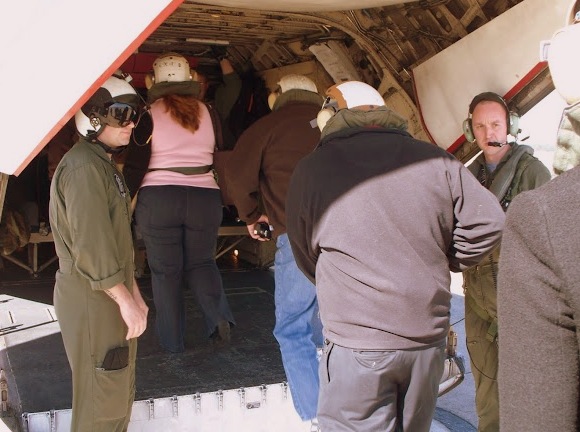
Boarding the COD Plane
The plane was a little leaky with oil falling on a couple of us. This might have scared some people off, but for some reason sitting on metal chairs with a helmet didn’t freak anyone out prior to takeoff. Which is always a good thing.
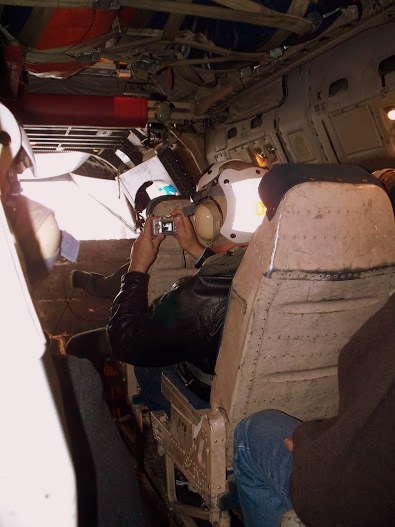
View from my seat facing towards the back of the plane. Big time effect on the equilibrium
The 80 mile some-what bumpy flight to the USS Truman took about 30 minutes; but due to a delay in landing, we had to circle the carrier for a nerve-racking 15 whole minutes.
Creating an immense about of stress for every minute that goes by, we circle the ship over and over again that only creates more turbulence with every go-round.
Couple this with the anticipation of landing and it was almost too much to bear.
That is until we heard the now infamous words:
“HERE WE GO, HERE WE GO”
“Oh sh*t oh sh*t oh sh*t” is all that was going through my head. Turns out, when you have about 10 seconds to think, you start thinking about the scope of what’s about to happen here.
You see, I like my fair share of roller coasters. Actually, I can’t get enough of them.
But am I really about to land in the middle of an ocean on an aircraft carrier?! A NUCLEAR aircraft carrier. But before you have enough time to freak yourself out is when the landing takes place.
“Ok we’re lowering. We should land soon. You’ve got this”.
AND THEN YOU HEAR THE BIGGEST SNAP YOU’VE EVER HEARD IN YOUR LIFE AND IT JUST CAME FROM BELOW YOU.
DEAD. DEAD. DEAD.
Is all that crosses your mind before you realize you feel the ground of something.
One eye starts to slowly open and your fists have a little more color in those white-knuckles of yours when you realize this whole landing on an aircraft carrier just worked out to your benefit.
We Landed. And We’re Still Alive.
The back door of the plane, which we had been facing the whole time while we circled countless times, opens up to a bright white light.
When your eyes become adjusted, the vision of sailors, machinery, and the ocean all came into view.
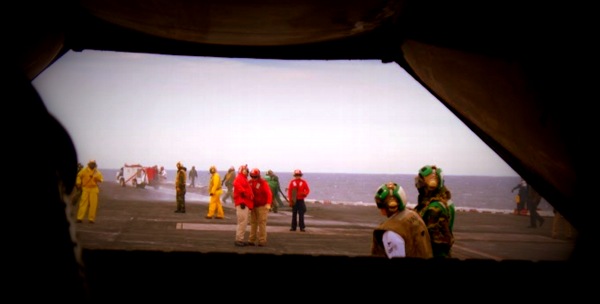
The view you see from your seat on the plane when the back door opens up after landing on aircraft carrier.
We were taken from the plane, instructed not to take any pictures just yet (due to the immense danger) and to follow in a single file line up to a viewing tower where we were to meet the CO of the USS Harry S. Truman (CVN 75).
They were waiting to greet us with big smiles on their faces. Both welcomed us to the Truman and prepared to brief us on what to expect during our visit and what he hoped we would take from this along with custom name tags, embroidered hats, and refreshments.
Too bad it wasn’t a stiff drink to help tame the nerves.
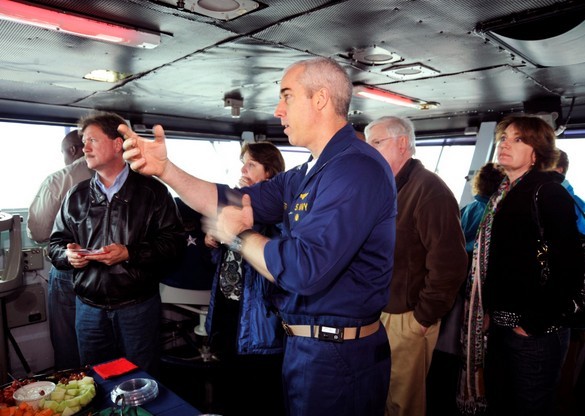
Commanding Officer gives us a rundown of what should expect after just landing on the aircraft carrier
In the hustle from going from the landing to the viewpoint, it’s tough to focus on what anyone was saying because of the jet’s noise decibel level as they were repeatedly taking off and landing while we were headed to “the Viewing Tower”.
In fact, reading lips was a heck of a lot easier than trying to hear a sailor standing less than a foot scream “GO THIS WAY”.
And as you are witnessing the jets landing from the tower, it suddenly hits you…”We just did that!”
Upon wrapping up the initial meet and greets is when the real tour started. We were given a trip itinerary in which it listed all the stops on the tour we’d be making.
Our first stop was a top tower viewpoint that included the Captain’s Chair that each of us was invited to sit in to take pictures.
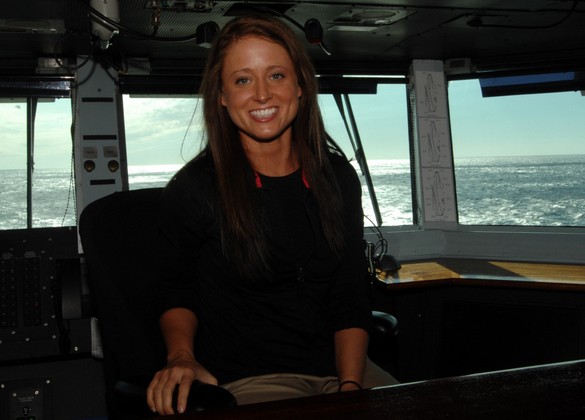
Sitting in the Captain’s chair of the USS Harry S. Truman
How the Arresting Cable System Works for Landings
Remember the SNAP sound as the plane landed? It was this very next room that it was explained how the cable landing system worked that explained this feeling at the bottom of the plane.
There’s a 4 cable system on the ship that, ideally, every plane should hook onto the third cable in the line creating a perfect grade of A for landing.
Should you miss the 4th cable, the pilot must immediately plan for take-off to try again or start swimming.
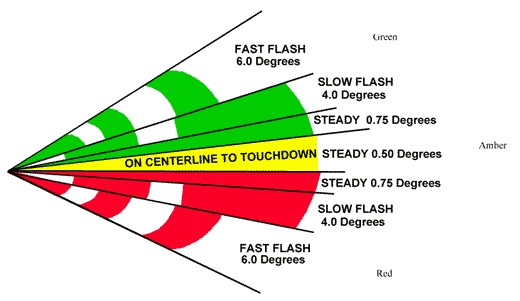
But how do the pilots know where to land on the carrier while you are up in the sky? The radar system onboard the ship has a series of color coded lights that the pilot follows.
“The pilot will see different lights depending on the plane’s angle of approach. If the plane is right on target, the pilot will see an amber light, dubbed the “meatball,” in line with a row of green lights. If the amber light appears above the green lights, the plane is coming in too high; if the amber light appears below the green lights, the plane is coming in too low. If the plane is coming in way too low, the pilot will see red lights.”
Our next stop was the incredibly impressive flight deck.
Jets taking off and landing, guys in different colored shirts running around, equipment being shuttled from one part of the ship to the other; it all seemed chaotic to a civilian but to the Navy, it’s just a large-scale but very controlled atmosphere.
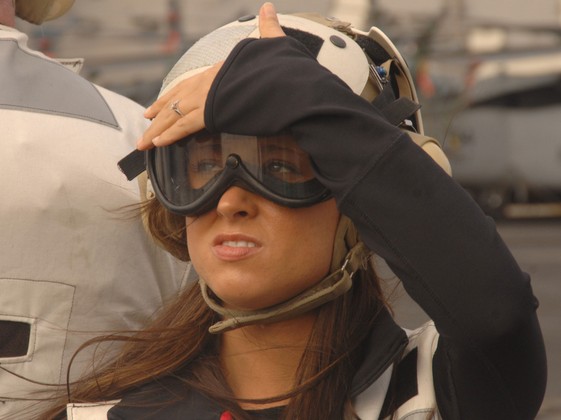
Viewing the jets taking off and landing from the Flight Deck
Facts About the Flight Deck
The flight deck can be cleared in 7 minutes tops in case a plane needs to make an emergency landing or take off.
Planes take off from the carrier using a steam powered catapult system.
The planes can either take off or land in 45 second intervals
All sailors are aware of FOD (foreign object detector) Something as small as a nail can damage a plane’s engine.
Planes coming in land on the carrier at about 140mph and have to stop at under 4 seconds.
The Arresting Gear Room (where the cable machine is located) can catch 3 birds a minute and 6 different types of planes.
The cables are 1150 feet long and can hold up to 210,000 pounds of pressure. Only twice in 10 years has the cable ever snapped.
The Many Areas of the Ship
After the flight deck we were taken around to the different areas around the ship.
In the Primary Flight Control Room, the “Ouija board” is used to show the exact placement on the ship of all the planes and their status by using push pins, nuts and jacks (yes the same Jacks you played as a kid).
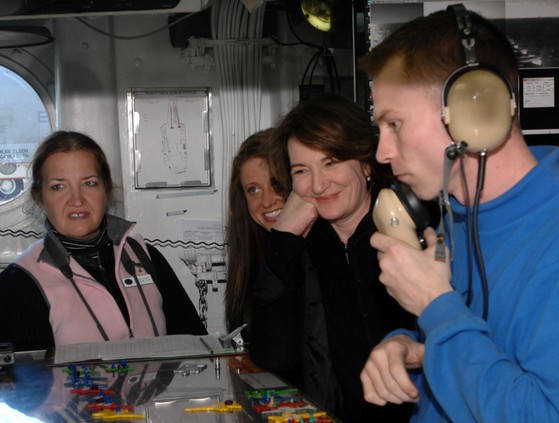
The exact location of all planes and jets are kept track of on this board
In the Hanger of the aircraft is where we got get up close and personal with the planes. It even included a gym and basketball hoop.
In the event of a fire or attack, the hanger can be separated into 3 different areas that can be completely sealed off from threats.
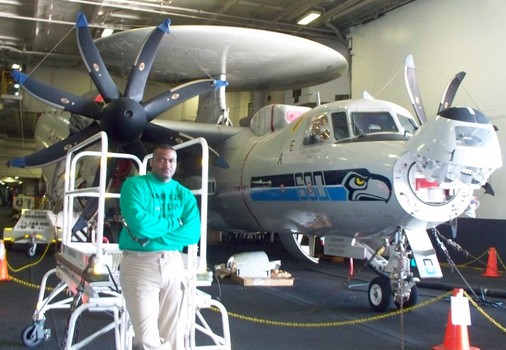
One of the planes that goes out regularly to test weather patterns in the area. “Only weather patterns”, I’m just sure of it.
The Ship Store was a favorite among all of us as we quickly grabbed more souvenirs but this time it was for family and friends. The ship store manager claimed the ship can do $30k-$45k a day in the store.
Though the store accepts cash, the sailors use a debit card on the ship to transfer money from their personal bank account into their “ship account”. This card is used all over, on and off the ship.
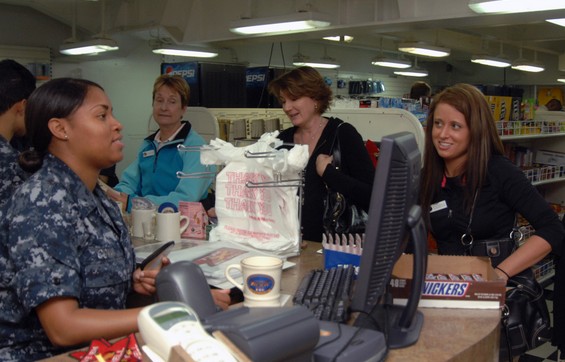
The ship store where you can find just about anything and pay for it with your own personal “ship card”
Of course any carrier is going to have weapons. While the weapons department could neither “confirm nor deny” the existence of a nuclear weapon on board they did however show us the extensive supply of bombs and missiles on board.
The big grey looking boxes are actually live missiles. We were pretty tired by this point in the day and turned to see what we were all sitting on, and it was actually a box of missiles. Fabulous!
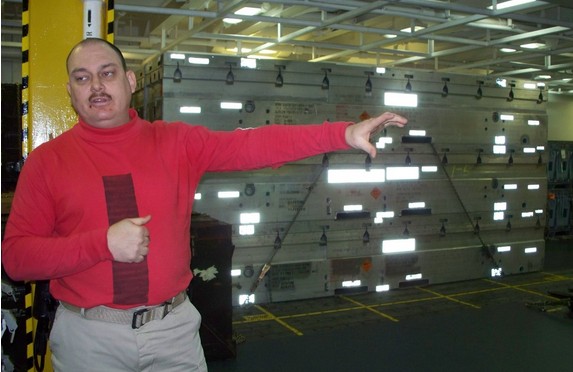
Those big gray boxes back there? Oh. They’re just live missles.
Live bombs on board are kept 3 decks below water. Many of these bombs are interchangeable and depending on the configuration, can make an entirely new weapon.
All of the weapons on board the ship are tracked electronically as well as on paper.
The Navy strongly believes in this system because if electronics fail, they must have something to fall back on. These weapons are monitored 24/7 whether out to sea or at port.
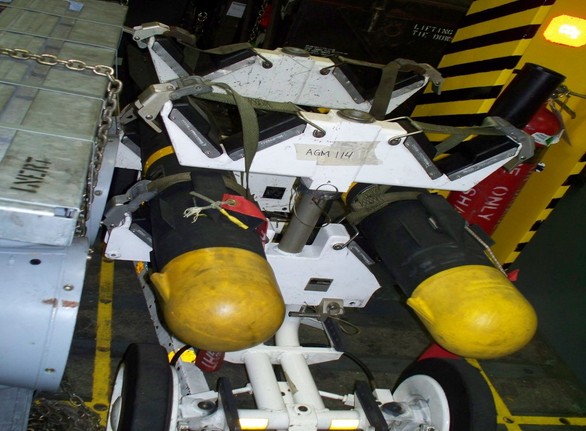
Just a couple of live missiles wider than your torso. No big deal.
Naturally a ship that holds 5,500 people is going to need a lot of food. The lead Chef on the ship says the ship goes through 2,000 cookies a day, 13 cases of bread with 24 loafs in each case a week and about 8,000 pounds of chicken per week.
The chef’s work off of a 14 day recipe series cycle and try to keep food costs around $10 per person, per day.
The same recipes are used on all carriers so that the food stays consistent throughout the Navy. The food cost budget is increased around the holidays, along with most of the waistlines of American civilians.
The kitchen is constantly cooking for 23 hours of the day. The other hour is spent cleaning during “Happy Hour”.
No, not that kind of Happy Hour, its a special “Clean Everything” Happy Hour.
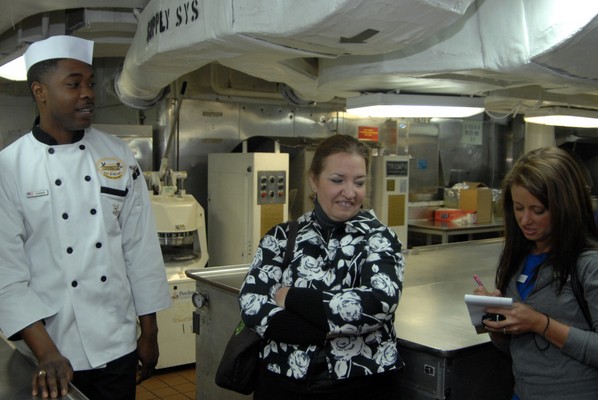
One of the Chefs onboard the Truman explaining that they go through about 2,000 cookies a day
The most comforting part of the ship happened to be the most welcoming. The Place of Worship.
In this church, all religions were welcome from Catholics, Jewish, Mormons, Muslims, Protestants. You name it, they allow you to worship it.
The Navy Chaplains in particular were the warmest and most welcoming people on the ship. They firmly believe in not being stuck in the place of worship, but being in the community of sailors and families.
Last year alone, they did over 6500 hours of community service.
The Chaplains on the ship are a major positive force for the sailors as they remind the sailors that there is a greater morality to life.
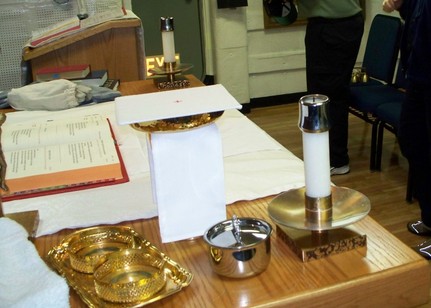
Some of the many items of worship Chaplains on board the ship use to accommodate any religion of choice
The History of President Harry Truman
Perhaps one of the most interesting visits was the room dedicated to former president
Famous for the saying “Give Him Hell” which is plastered all over the ship, Truman’s response to his catchphrase was:
“I have never deliberately given anybody hell. I just tell the truth on the opposition and they think its hell”.
Unlike present day Congress (who receive the exact same pay and benefits even when they retire) Truman believed in old school politics.
Once his term was over, he never made a dime off public speeches or appearances. He merely wanted to quietly live out his life happy with his family.
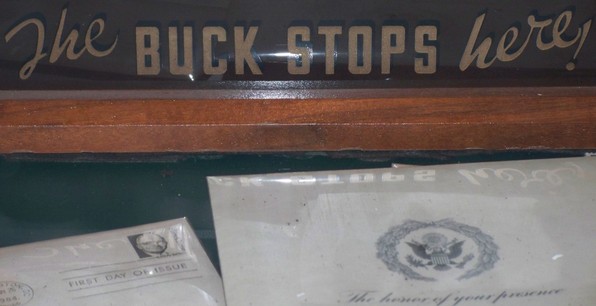
Harry S. Truman’s infamous slogan that adorns the ship in almost every room.
Truman also helped to established the United Nations, the State of Israel, desegregated the military and made the call to drop the A-bomb twice in Japan.
The following is a picture of the original note he wrote giving the order to drop the bomb.
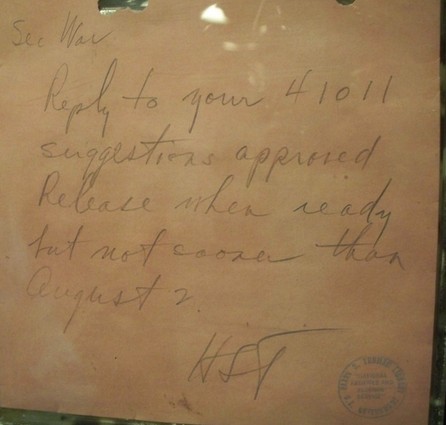
The hand-written order Truman made for the official order to drop the A-bombs in Japan.
The Truman also features a metal & wood shop, movie theater, full production studio, design & media for print and electronic marketing, radio production and many more items that could sustain a city on the water.
Trying to Sleep While Jets Are Landing Is a Little Tough
By the end of the first day, we were all pretty tired and anxious to go to bed. Lucky for us, we were staying in the “suites” on the ship which consisted of a bunk bed, one locker, one sink and 2 desks.
I had the honor of the top bunk and trying to figure out how to jump up and down from the bed brought memories of when my brother owned some bunk beds.
Except the Navy bed didn’t have a ladder. Guess that’s what the handle is for?
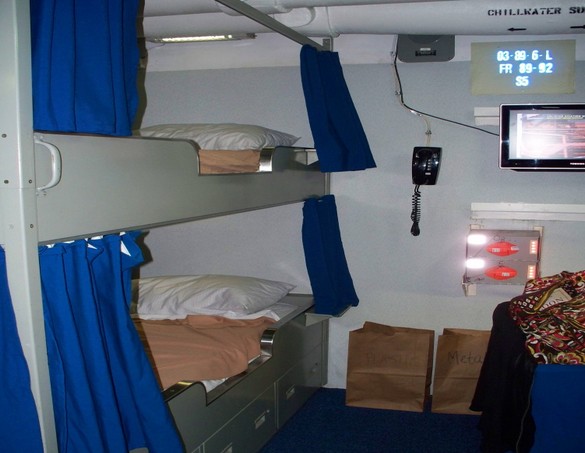
Where we slept is considered the “Suite of the Ship” as sailors normally sleep 6 bunk beds tall
The beds were quite comfortable (or I was just that tired) but as tired as I was, sleep was hard to come across as we were staying on the deck directly below jets that were practicing taking off and landing.
I will never complain about my neighbor starting his lawnmower at 9am on a Saturday ever again.
Interacting With the Sailors
The ultimate highlight of this trip was the simple interaction with the dedicated sailors.
Between the wonderful food at dinner, the chats with Chaplain Hinson and the inspirational words from , the breakfast with the sailors was the highlight of the trip.
They explained about their workdays (some being as long as 18 hours a day but always at least 12 hours), everyone works 7 days a week.
Our 2 rack bunk bed seemed like tight quarters, but when I heard of the 6 rack bunk system, I quickly stopped complaining.
They do have ways of winding down when they’re not working.
Sailors can work out at the seaside gym, watch TV, play video games and during important sporting events like the AFC & NFC Championship games, most of the TVs on the ship are all tuned in.
What struck me most during the breakfast chat with three female sailors is the positive light that seemed to beam from them.
They were so happy and really made you realize how lucky the American civilians really have it that such strong women were helping to lead this country.
If there was one thing I wish I could have done more on this trip is to interact more with the sailors.
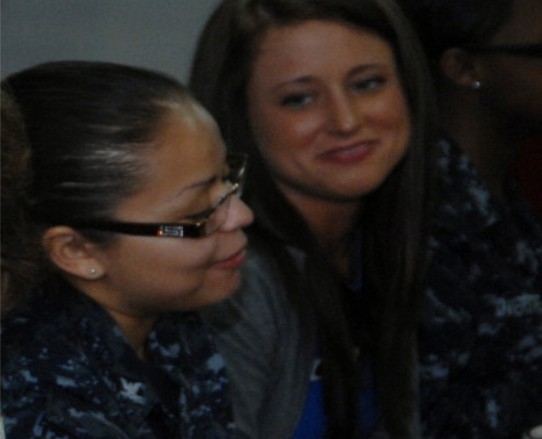
Listening to one of the sailors talk about everyday life on board the Truman
The Final Briefing
At around 1pm, it was time for trip to come to a close. We participated in a final briefing by the CO where we were given another customary coin.
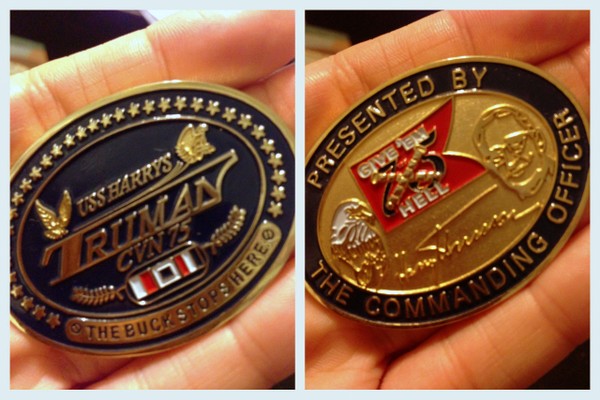
The front and back of the coin the Captain of the USS Harry S. Truman gave to everyone in the program
To go along with the coin, we were given a folder of documents on the history of the Truman, high level Captain bios, a Truman bio, a cd of all the pictures that were taken and even a printed picture of an aerial shot of the Truman and my personal favorite, a picture of our group with a jet landing in the background.
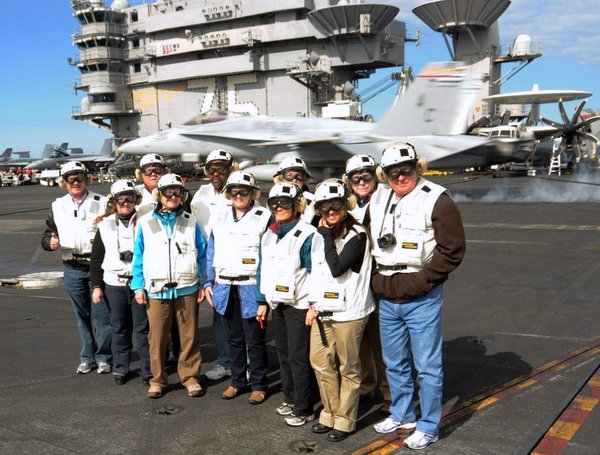
The entire group with a jet landing directly behind us
So after almost 5 miles walked during our tour and DOZENS of flights of stairs, it was time for the final briefing where we were handed our helmets and life vests.
The directions for taking off of the carrier came quick and we were told to “put our feet on the chair in front of us, cross our arms to hold onto the harness and duck our head down” during takeoff.
I was lucky enough to get a seat by the window this time but was too scared to look out of the window since we were faced backwards and the plane (faced opposite) was about to go 4G’s in 3 seconds.
While waiting for what seemed like an eternity, I was able to snap this picture a few minutes before we took off.
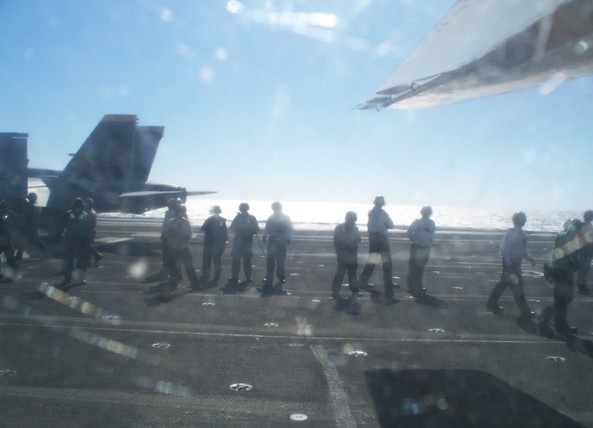
The scene from the scratched up window just before takeoff where we all experienced 4G’s in 3 seconds
Once we were all buckled in and give the all clear, we heard the infamous words “HERE WE GO, HERE WE GO”.
Taking off from an aircraft carrier can only be described as the best best roller coaster you will ever ride.
The takeoff is so quick you don’t have time to be scared until the plane feels like it drops 100 feet before feeling the plane catching the wind as it begins to fly normally.
As you feel the plane “catch” is the first moment you can let out a deep sigh of relief and become brave enough to peak out of the window to see nothing but beautiful blue skies and the never-ending ocean.
After the Trip of a Lifetime
After making it back to the airport, calling my family to tell the stories I have shared with you, this once in a lifetime trip really came into focus while I was driving home and saw the helicopters practicing by my home near Mayport Naval Base.
This is when I realized how many times we take our freedoms for granted.
“Most of us, most of the time live in blissful ignorance of what a small, elite, heroic group of Americans are doing something very dangerous…Right now, somewhere around the world, young men are landing high-performance jet aircraft on the pitching decks of aircraft carriers—AT NIGHT!
You can’t pay people to do that; they do it out of love of country, of adventure, of the challenge. We all benefit from it; and the very fact that we don’t think about it tells you how superbly they’re doing their job, living on the edge of danger so the rest of us need not think about, let alone experience, danger.”
-George Will
Nothing has given me a greater respect for our military than this trip. Saying this a thousand times is never enough but THANK YOU for all that you do!
Navy Distinguished Visitor Embark Group- January 25th-26th 2010
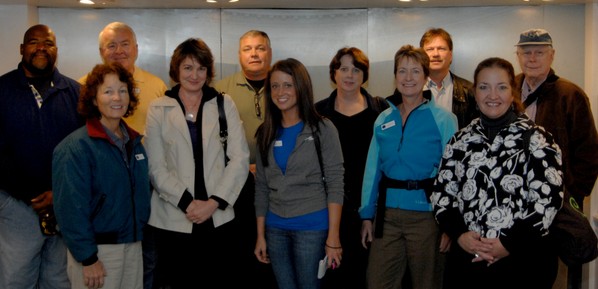
Navy’s Distinguished Visitor Embark Visit. January 2010
Special THANK YOU to Suzanne Speight for giving me this opportunity of a lifetime. I will forever be grateful.
In honor all POW’s and MIA’s, you are never far from our thoughts and prayers.
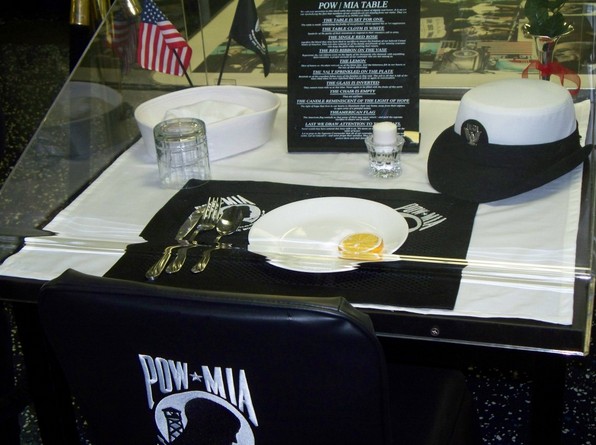
The table that is ALWAYS set for the POW and MIA reinstating that these people are not forgotten
This article was originally published in 2010.